
How to maintain non-metallic expansion joints?
Release time:
2022-11-28
The non-metallic compensator industry has excellent development prospects, as it offers numerous benefits to enterprises during use, making it highly favored by customers. To help more people understand and appreciate these compensators, we’ll now discuss the maintenance methods for non-metallic compensators—hoping to provide useful guidance to as many individuals as possible.
The non-metallic compensator industry has excellent development prospects, as it offers numerous benefits to enterprises during use, making it highly favored by customers. To help more people understand and appreciate this product, we’ll now discuss the maintenance methods for non-metallic compensators—hoping that this information will be helpful to many others.
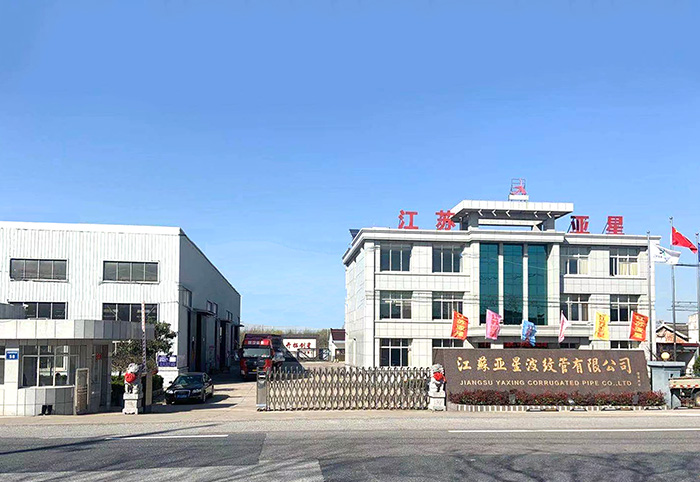
Today, many people still lack a basic understanding of non-metallic expansion joints. As the manufacturer, we feel it’s necessary to briefly explain their function: actually, this non-metallic expansion joint is a flexible, pressure-resistant pipe fitting installed in liquid transport systems. It’s used to compensate for relative displacements at the connection points between pipes, machinery, or equipment, absorb vibrations, and thereby reduce shock and noise. With a non-metallic expansion joint, you may need sufficiently flexible conveying pipes to prevent vibration and protect the pipelines themselves. This type of joint is suitable for industries such as steam, gas, air, heavy oil, petroleum, and chemical processing. When I learned more about it, I also discovered that it primarily employs one-time hydraulic forming and mechanical forming technologies to provide compensation for bending in the axial, lateral, and angular directions of the pipeline. Its key functions include absorbing axial, lateral, and angular thermal deformations in the pipeline, dampening equipment vibrations, and minimizing the impact of equipment vibrations on the pipeline. Moreover, it can also accommodate pipeline deformations caused by settlement. Additionally, it features corrugated expansion joints designed and manufactured with computer-optimized techniques, offering advantages such as precise dimensions, smooth and undamaged surfaces, a compact product structure, large compensation capacity, leak-proof performance, resistance to corrosion, long service life, easy installation, and excellent quality.
Although non-metallic expansion joints have many advantages, there are also numerous points that require attention. For example, before installation, it is essential to verify that the model, specifications, and pipe support configuration of the expansion joint comply with the design requirements; otherwise, damage may occur. In addition, it’s important to note that the expansion joint structures for the feed pipes at each stage of the preheater have identical dimensions, differing only in the material used for the inner cylinder. The higher the temperature, the higher the material grade required. Therefore, you should carefully identify the material markings on the expansion joint to avoid incorrect installation. The expansion joints are pre-stretched at the factory, so it is strictly prohibited to alter their height to compensate for installation errors. After installation, only the fixing screws may be removed—no other external equipment should be interfered with, as this could cause compression and deformation during expansion. Before installation, carefully check whether the rockwool filling inside the expansion joint has fallen out. During transportation or installation, lifting operations might dislodge the rockwool, causing this area to become filled with material during operation. This can render the expansion joint ineffective, leaving it unable to accommodate thermal expansion and resulting in severe deformation of the equipment.
Having introduced the above content, we’ve also gained a deeper understanding of how to maintain non-metallic expansion joints. So next time you see one, it won’t feel unfamiliar anymore, and you’ll be less likely to encounter problems during use. Well, that’s all for today’s session—stay tuned for even more exciting insights in the future!
Related News

A specialized enterprise dedicated to the design and manufacture of desulfurization damper doors, non-metallic expansion joints, bellows, expansion compensators, stainless steel flexible metal hoses, dust collectors, conveyors, compensators, silencers, dampers, and stainless steel flexible metal hoses, as well as metallic and non-metallic corrugated expansion joints (expansion compensators).
Jiangsu Yaxing
Contact Us
Address: Qingdun Industrial Park, Hai'an City, Jiangsu Province
Phone: 86-513-88483622 ,86-513-88480666,
Fax: 86-513-88482423
Email: yx@ntyxbwg.com
Copyright © 2026 Jiangsu Yaxing Corrugated Pipe Co., Ltd.