
What are the precautions for using non-metallic expansion joints?
Release time:
2022-12-22
Non-metallic expansion joints can effectively compensate for thermal expansion and provide multi-directional compensation. Moreover, they outperform certain metallic expansion joints in terms of performance, offering greater practicality and superior compensation results. Below, we’ll share some important considerations for using non-metallic expansion joints—hopefully, this will be of great help to you.
Non-metallic expansion joints can effectively compensate for thermal expansion and provide multi-directional compensation. Moreover, they outperform certain metallic expansion joints in terms of performance, offering greater practicality and superior compensation results. Below, we’ll share some important considerations for using non-metallic expansion joints—hopefully, this information will be of great help to you.
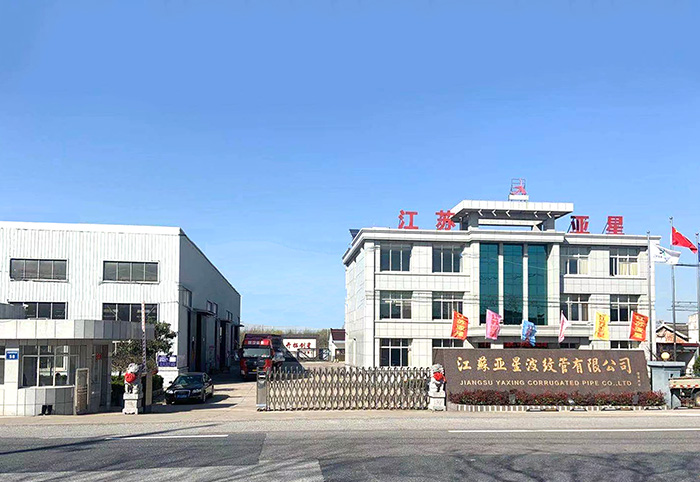
Non-metallic expansion joints are gaining widespread popularity. When in use, they generate no reaction thrust. These expansion joints primarily rely on fiber fabrics for compensation, offering excellent transmission performance and remarkable stability. This design can be simplified, eliminating the need for large supports—thus not only reducing overall investment but also cutting labor costs. Currently, this product boasts outstanding high-temperature resistance and corrosion resistance, effectively ensuring reliable performance and extending service life. Since the primary material is fiber fabric, however, its transmission capability is relatively weaker. By using fiber-based expansion joints, designers can simplify the overall system, avoid the need for bulky supports, and significantly save on both materials and labor. Non-metallic expansion joints are widely used in flue gas ducts, ventilation pipes, and engineering applications requiring vibration isolation and flexible connections in industries such as power generation, metallurgy, environmental protection, cement and building materials, and petrochemicals. Compared to metallic expansion joints, which can only compensate in one dimension, non-metallic expansion joints perform far better when compensating in multiple dimensions. Moreover, this advantage stems from the inevitable system errors that occur during pipe installation; non-metallic expansion joints are better equipped to absorb and mitigate these installation errors.
However, we need to bear in mind that during installation, it’s essential to follow the specifications and model numbers provided by the design department. During the installation process, special attention should be paid to preventing damage to the fabric fibers from electric welding, sparks, or sharp objects. When installing non-metallic expansion joints, in addition to these precautions, you must also ensure that the direction indicated on the wear-resistant bushing aligns with the flow direction of the pipeline medium. Be sure to install the transport securing rods as well. After installation is complete, loosen the internal nuts of the tie rods. The tie rods must not be removed under any circumstances to guarantee the proper functioning of the expansion joint. It’s also important to note that keeping the expansion joint in its natural state can significantly extend its service life. Alternatively, during installation, if welding is involved, take care to protect the skin of the non-metallic expansion joint from being burned by electric sparks. Although these joints now exhibit excellent corrosion resistance, during both installation and operation, pay close attention to the corrosive environment around them to avoid skin irritation. Before selecting an expansion joint, users should consider its temperature resistance. You can opt for materials such as temperature-resistant asbestos or PTFE fabric to enhance its thermal performance.
Having introduced the above content, we’ve also gained a deeper understanding of the precautions for using non-metallic expansion joints. The next time you see one, it won’t feel unfamiliar anymore, and you’ll be less likely to encounter problems during use. Well, that’s all for today’s session—stay tuned for even more exciting insights in the future! If you have any technical questions about our products, feel free to reach out and consult us anytime.
Related News

A specialized enterprise dedicated to the design and manufacture of desulfurization damper doors, non-metallic expansion joints, bellows, expansion compensators, stainless steel flexible metal hoses, dust collectors, conveyors, compensators, silencers, dampers, and stainless steel flexible metal hoses, as well as metallic and non-metallic corrugated expansion joints (expansion compensators).
Jiangsu Yaxing
Contact Us
Address: Qingdun Industrial Park, Hai'an City, Jiangsu Province
Phone: 86-513-88483622 ,86-513-88480666,
Fax: 86-513-88482423
Email: yx@ntyxbwg.com
Copyright © 2026 Jiangsu Yaxing Corrugated Pipe Co., Ltd.