
Precautions for Using Non-Metallic Compensators
Release time:
2022-12-28
Non-metallic expansion joints are devices with excellent performance and a wide range of applications, which is why they are frequently used in various fields. When using non-metallic expansion joints, it’s essential to first understand their structure and composition and select the appropriate model to ensure optimal performance. So, let’s now take a closer look at the precautions for using non-metallic expansion joints.
Non-metallic expansion joints are devices with excellent performance and a wide range of applications, which is why they are frequently used in various fields. When using non-metallic expansion joints, it’s essential to first understand their structure and composition and select the appropriate model to ensure optimal performance. So, let’s now take a closer look at the precautions for using non-metallic expansion joints.
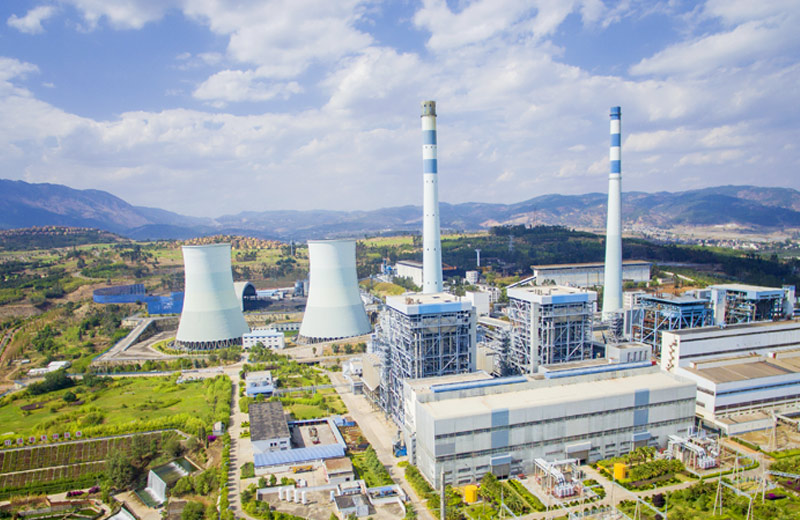
This necessitates that the design of piping systems take into account comprehensively factors such as pipeline routing, arrangement of support structures, and selection of compensator types, in order to achieve a reliable, economical, and rational solution. In industries such as petrochemicals, metallurgy, and power generation, there are numerous high-temperature pipelines with medium temperatures reaching up to 600°C—for example, waste-heat recovery pipelines in petrochemical boilers, dust removal pipelines in electric furnace steelmaking in the metallurgical industry, and circulating fluidized-bed pipelines in the power industry. Consequently, the demand for high-temperature-resistant non-metallic compensators is steadily increasing. The high-temperature non-metallic compensator capable of withstanding temperatures up to 600°C (hereinafter referred to as the “XB non-metallic compensator”) has been developed on the basis of research and production of various non-metallic compensators designed for operating temperatures below 400°C.
Non-metallic expansion joints typically consist of metallic structural components, expansion bellows, thermal insulation layers, and other parts. In non-metallic expansion joints, given that the medium temperature can reach as high as 600°C, a sleeve-type structure is employed at the connection between the flange and the expansion bellows to facilitate heat dissipation and allow heat to radiate outward through vertical plates at both ends. Additionally, when the expansion joint undergoes axial tension or compression during operation, gaps tend to form between the flanges of the thermal insulation layer, creating high-temperature pathways that directly affect the expansion bellows and compromise the sealing performance of the non-metallic expansion joint. To address this issue, a double-layer thermal insulation design is adopted, comprising an insulating pillow and an outer thermal insulation layer. The insulating pillow is fixed to the vertical plates at both ends of the expansion joint, effectively isolating the expansion bellows from the high-temperature medium and thereby raising the maximum operating temperature of the non-metallic expansion joint, ensuring the smooth and reliable operation of the equipment.
What key points should be noted when using non-metallic expansion joints?
1: Non-metallic expansion joints are the core component of expansion joints and pipelines, and the compensation requirements for each type of medium vary depending on the pipeline.
2: Non-metallic expansion joints can be widely used in pipeline systems for water supply and drainage, circulating water, HVAC, fire protection, papermaking, pharmaceuticals, petrochemicals, shipbuilding, pumps, compressors, fans, and more.
3: It boasts excellent etching and sealing performance. Easy to install, it can accommodate axial compensation in pipelines, and its large compensation capacity is a key advantage of axial compensators.
Non-metallic expansion joints can be widely used in piping systems for water supply and drainage, circulating water, HVAC, fire protection, papermaking, pharmaceuticals, petrochemicals, shipbuilding, pumps, compressors, fans, and more. The standard type is suitable for conveying air, compressed air, water, seawater, oils, acids, and alkalis at temperatures ranging from -15°C to 115°C. The molded type is designed for conveying the aforementioned media, as well as oils, concentrated acids and alkalis, and solids, with operating temperature ranges from -30°C to 250°C. Non-metallic flexible expansion joints consist of a flexible compensating element, flanges or pipe sections, materials, and bolt rods, and can accommodate large axial, angular, and lateral displacements within a relatively small installation space.
Non-metallic expansion joints feature no reaction thrust. The primary materials used are fiberglass fabrics and their coated products, and they require no power transmission. The use of non-metallic expansion joints simplifies the design, eliminates the need for large supports, and significantly saves on both materials and labor. Additionally, these joints provide noise reduction and vibration damping—thanks to the inherent sound-absorbing and vibration-damping properties of the fiber fabrics and thermal insulation cotton, which help minimize noise and vibration in systems such as boilers and fans. They are primarily used in gas pipeline systems transporting dust, coal gas, flue gas, and other gases, where displacement compensation is required due to temperature changes, mechanical vibrations, and foundation settlement. These joints combine the performance characteristics of non-metallic expansion joints and consist mainly of flexible compensating materials (non-metallic materials), connecting materials at both ends (flanges or end pipes), adjusting components (threaded rods), and auxiliary materials.
The above is a summary of the precautions for using non-metallic expansion joints. If you’d like to learn more, feel free to contact us anytime! Our company has many years of experience and looks forward to having you join us at any time.
Related News

A specialized enterprise dedicated to the design and manufacture of desulfurization damper doors, non-metallic expansion joints, bellows, expansion compensators, stainless steel flexible metal hoses, dust collectors, conveyors, compensators, silencers, dampers, and stainless steel flexible metal hoses, as well as metallic and non-metallic corrugated expansion joints (expansion compensators).
Jiangsu Yaxing
Contact Us
Address: Qingdun Industrial Park, Hai'an City, Jiangsu Province
Phone: 86-513-88483622 ,86-513-88480666,
Fax: 86-513-88482423
Email: yx@ntyxbwg.com
Copyright © 2026 Jiangsu Yaxing Corrugated Pipe Co., Ltd.