
What are the advantages of non-metallic expansion joints?
Release time:
2022-12-07
With the continuous advancement of science and technology, various industries have also experienced significant growth. As for non-metallic expansion joints, their development prospects are quite promising, leading to a steadily increasing demand. Consequently, the number of manufacturers in the market has also risen considerably. As producers, we feel it’s essential to share some key points about these products with you all. If you’re interested, let’s take a look together!
With the continuous advancement of science and technology, various industries have also experienced significant growth. As for non-metallic expansion joints, their development prospects are quite promising, leading to a steadily increasing demand. Consequently, the number of manufacturers in the market has also risen considerably. As producers, we feel it’s essential to share some key points about these products with you all. If you’re interested, let’s take a look together!
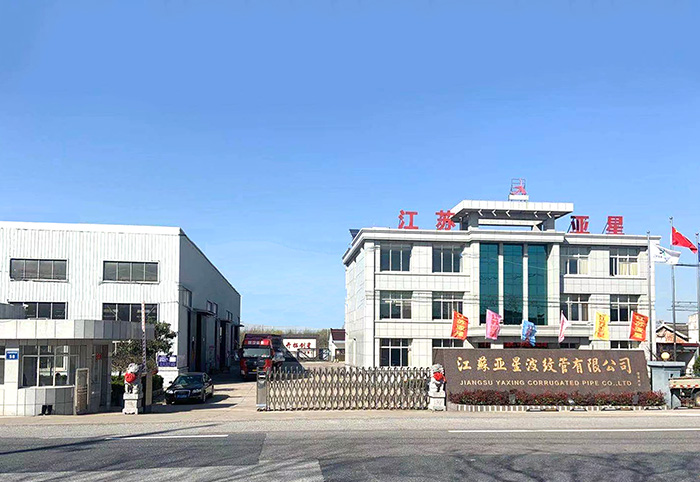
Before using this non-metallic expansion joint, many of you have had various questions and concerns. Therefore, to make better use of it, it’s essential to understand some key points about its operation. First, you should be clear that non-metallic expansion joints not only effectively absorb pipe expansion but also efficiently dampen pipe vibrations, making them ideal for use at equipment interfaces where vibration isolation is required. When selecting and sizing the joint, in addition to considering the operating temperature requirements, you should also pay attention to the combined thermal displacement of both the piping system and the equipment interface—this can serve as a crucial basis for your selection. In fact, this product is primarily made from stainless steel or other materials customized according to user specifications. It boasts excellent flexibility, corrosion resistance, high-temperature tolerance (-235℃ to 450℃), and high-pressure resistance (up to 32 MPa), allowing it to be connected in any direction within a piping system. Today, these joints are widely used for temperature compensation, vibration absorption, noise reduction, changing the flow direction of media, and accommodating mechanical displacements between pipes or between pipes and equipment.
Non-metallic expansion joints are particularly well-suited as connectors for various pumps and valves that experience displacement and vibration. They now offer axial, lateral, and angular compensation, featuring characteristics such as zero thrust, simplified support design, corrosion resistance, high-temperature tolerance, and noise reduction as well as vibration damping. They are especially ideal for use in hot-air and flue-gas ducts. If a non-metallic expansion joint burns through during operation, it should be addressed promptly. In cases where the expansion joint has wide gaps, severe cracking of the castable material, and a relatively short service life, ceramic fibers can be filled into the expansion joint and high-temperature thermal sealant applied in layers. This approach not only strengthens the bond between the ceramic fibers and the expansion joint but also provides temporary sealing for the cracked castable material; after shutdown, the damaged section can be replaced. In summary, non-metallic expansion joints offer multi-directional compensation, which is far superior to metallic expansion joints that can only compensate in a single direction. The selected fluoroplastic and silicone materials exhibit excellent high-temperature and corrosion resistance. Overall, these joints are lightweight, have a simple structure, and are easy to install and maintain. Since system errors are inevitable during pipeline installation, non-metallic expansion joints can better accommodate and compensate for installation inaccuracies. Currently, with a relatively complete production and installation system in place, fiber expansion joints can guarantee leak-free performance.
The above article has introduced to you all the advantages of non-metallic expansion joints, and it also shared information about a reputable manufacturer of such joints. If you have any needs in this area, feel free to take a look—hopefully, this will be helpful to you.
Related News

A specialized enterprise dedicated to the design and manufacture of desulfurization damper doors, non-metallic expansion joints, bellows, expansion compensators, stainless steel flexible metal hoses, dust collectors, conveyors, compensators, silencers, dampers, and stainless steel flexible metal hoses, as well as metallic and non-metallic corrugated expansion joints (expansion compensators).
Jiangsu Yaxing
Contact Us
Address: Qingdun Industrial Park, Hai'an City, Jiangsu Province
Phone: 86-513-88483622 ,86-513-88480666,
Fax: 86-513-88482423
Email: yx@ntyxbwg.com
Copyright © 2026 Jiangsu Yaxing Corrugated Pipe Co., Ltd.